Balancing Your Dog’s Health Through TCM Food Energetics
Furry Rescue Foundation — Holistic Nutrition for Every Pup
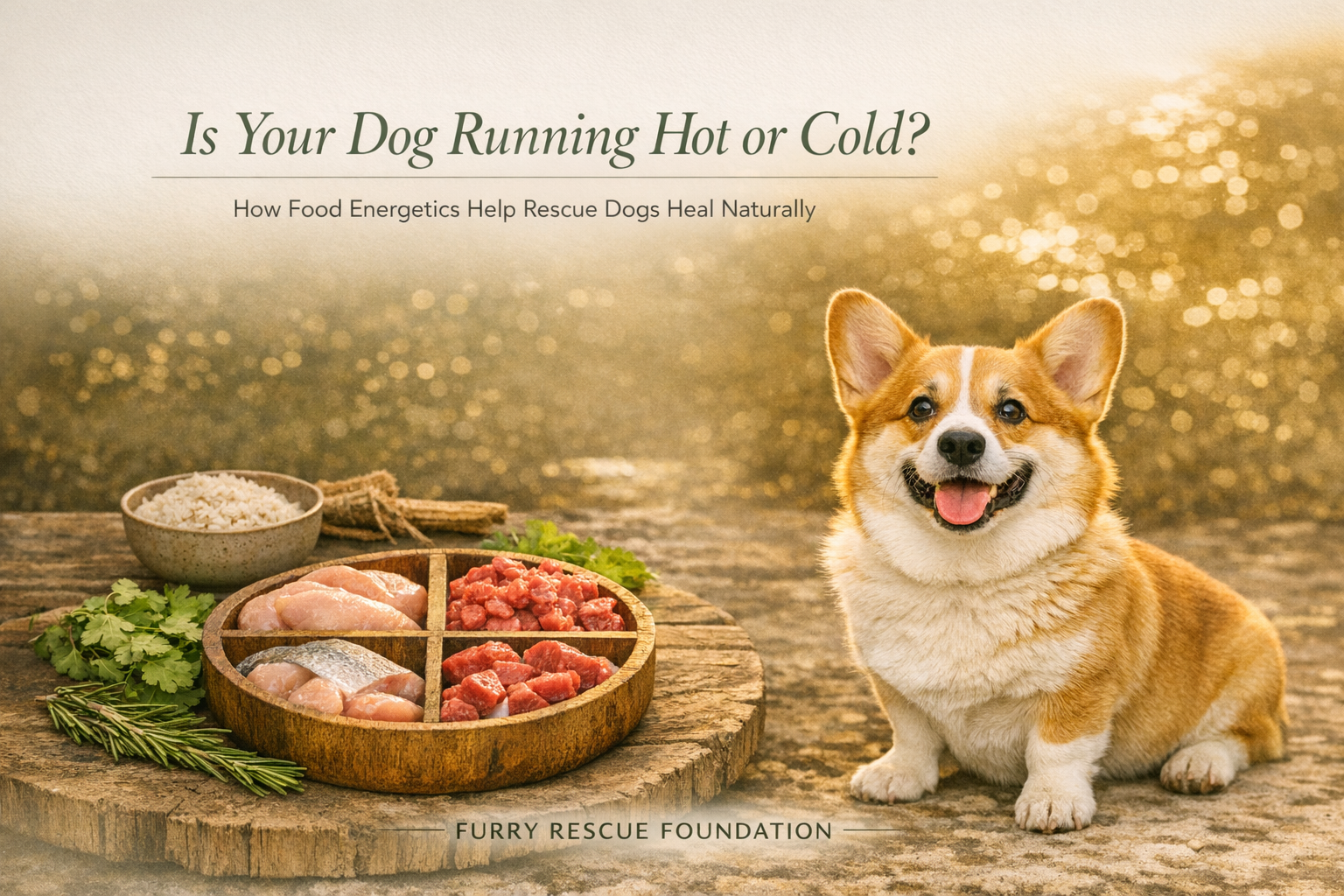
Understanding TCM Energetics for Dogs
At Furry Rescue Foundation, we see every dog as a whole being — body, mind, and spirit.
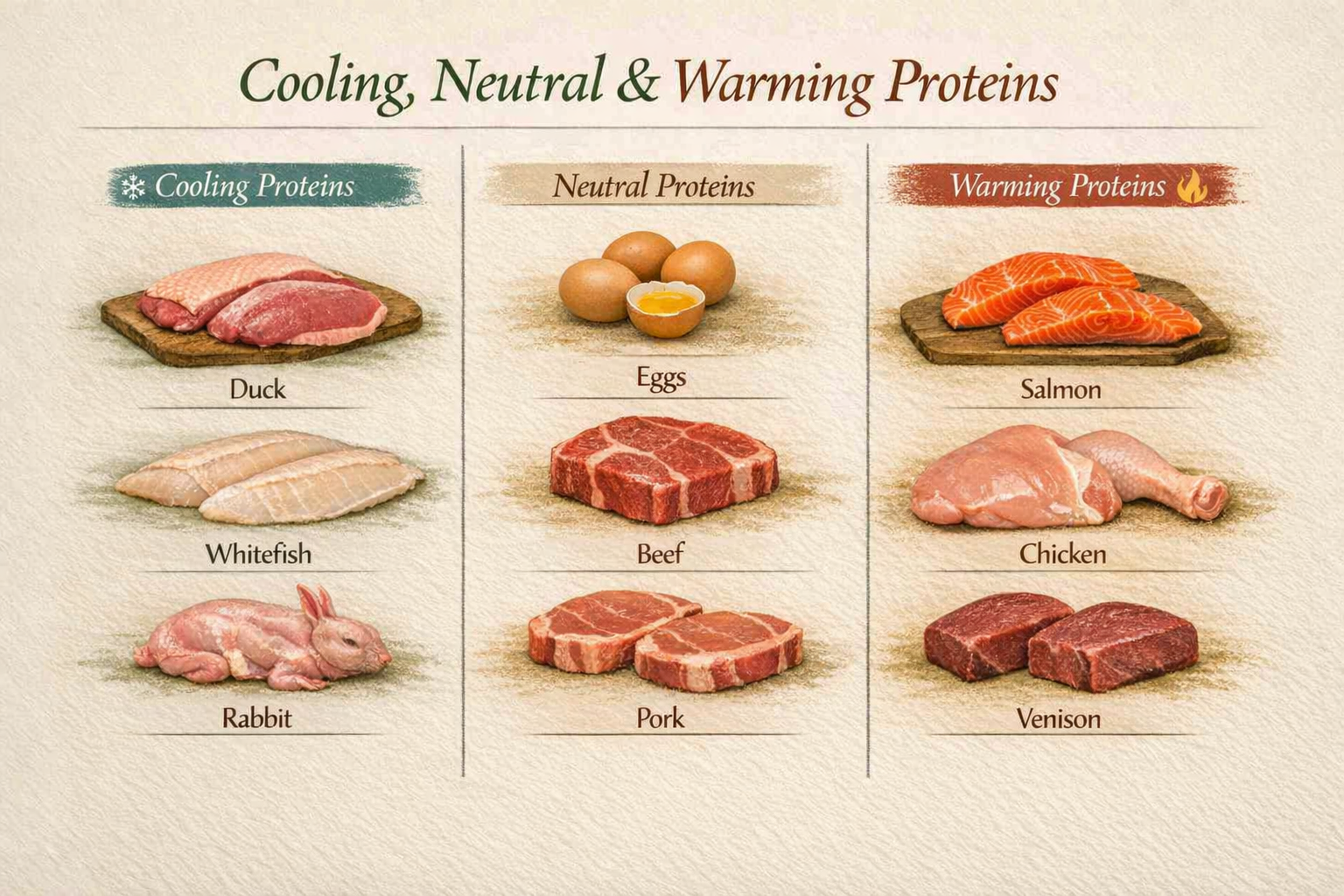
Traditional Chinese Medicine (TCM) teaches that food carries an energetic temperature: cooling, neutral, warming, or hot. These energies influence how a dog’s body responds to stress, heat, digestion, and emotional balance.
When we choose proteins based on energetics, we’re not just feeding — we’re helping restore harmony.
A “hot” dog with itchy skin or anxiety may thrive on cooling foods like duck or rabbit.
A “cold” dog who shivers or tires easily may need warming proteins like chicken or salmon.
How to Tell if Your Dog Is “Hot” or “Cold”
Simple signs and cues you can observe at home
Understanding your dog’s energetic pattern helps you choose the right proteins. Here are the clearest indicators:
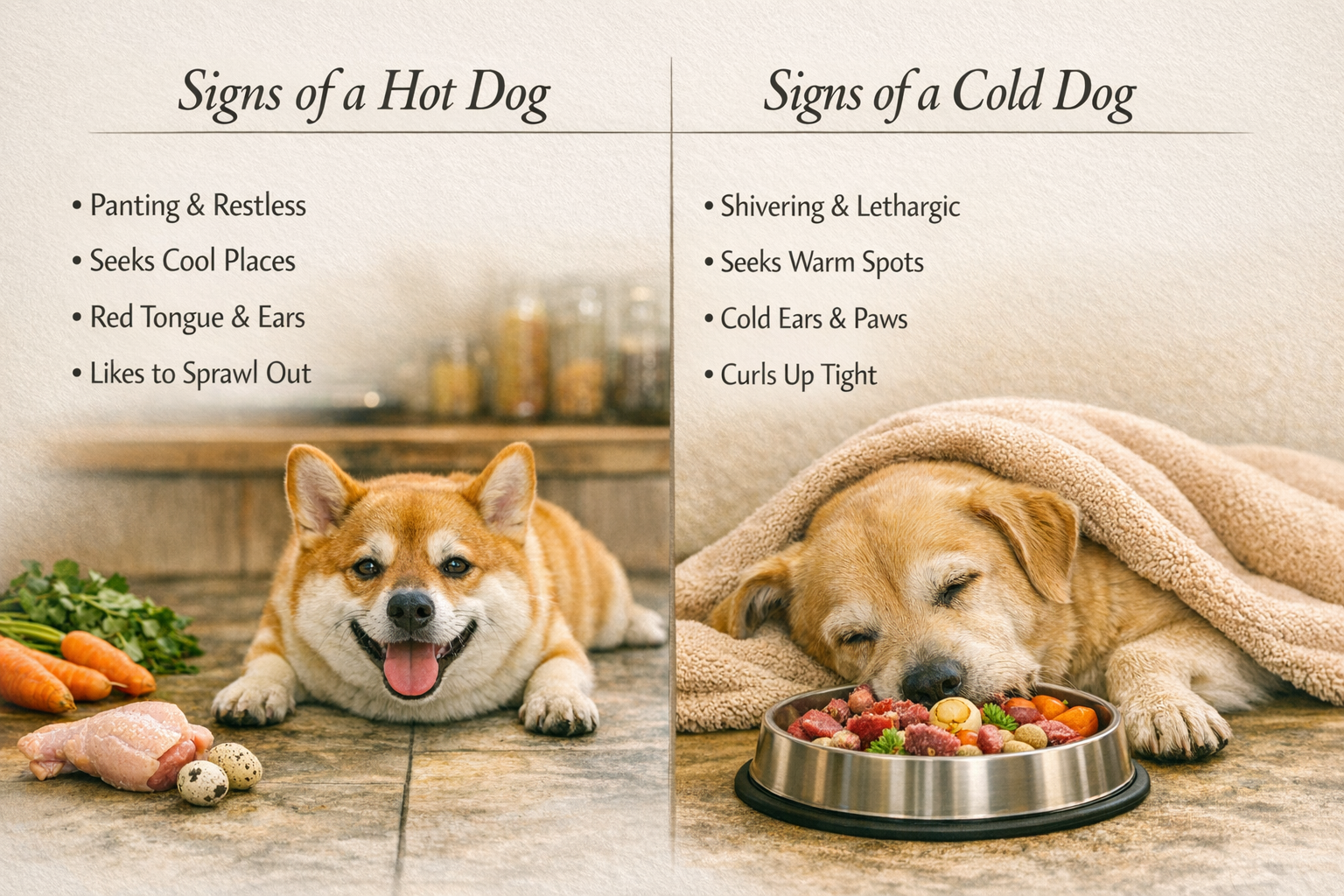
Signs of a “Hot” Dog
Dogs with excess heat often show outward, visible signs of inflammation or restlessness.
Common cues:
• Itchy skin, redness, hot spots
• Panting even at rest
• Warm ears, warm belly, warm paws
• Prefers cool floors or cold environments
• Restless, anxious, easily overstimulated
• Strong odor from skin or ears
• Loose stools or digestive heat
• Drinks a lot of water
• Seeks space, avoids cuddling when warm
Energetic interpretation:
Their internal “fire” is too high — cooling proteins help soothe and rebalance.
Signs of a “Cold” Dog
Cold dogs tend to be slower, quieter, and physically cooler to the touch.
Common cues:
• Low energy, sluggishness, slow to warm up
• Cold ears, cold paws, cool belly
• Prefers blankets, sunbeams, warm laps
• Shivers easily or dislikes cold weather
• Poor appetite or slow digestion
• Soft stools or “cold” diarrhea
• Calm, quiet, or withdrawn temperament
• Seeks warmth and physical closeness
Energetic interpretation:
Their internal “yang” is low — warming proteins help support circulation, digestion, and vitality.
The TCM Protein Energetics Chart
How to Use This Chart:
1. Observe your dog’s temperament and body cues.
Hot dogs: restless, itchy, red skin, panting.
Cold dogs: low energy, seeks warmth, slow digestion.
2. Rotate proteins weekly.
Balance cooling and warming foods to maintain harmony.
3. Adjust seasonally.
Summer: lean toward cooling proteins.
Winter: add warming proteins for comfort.
4. Always consult your vet.
TCM energetics complements, not replaces, veterinary care.
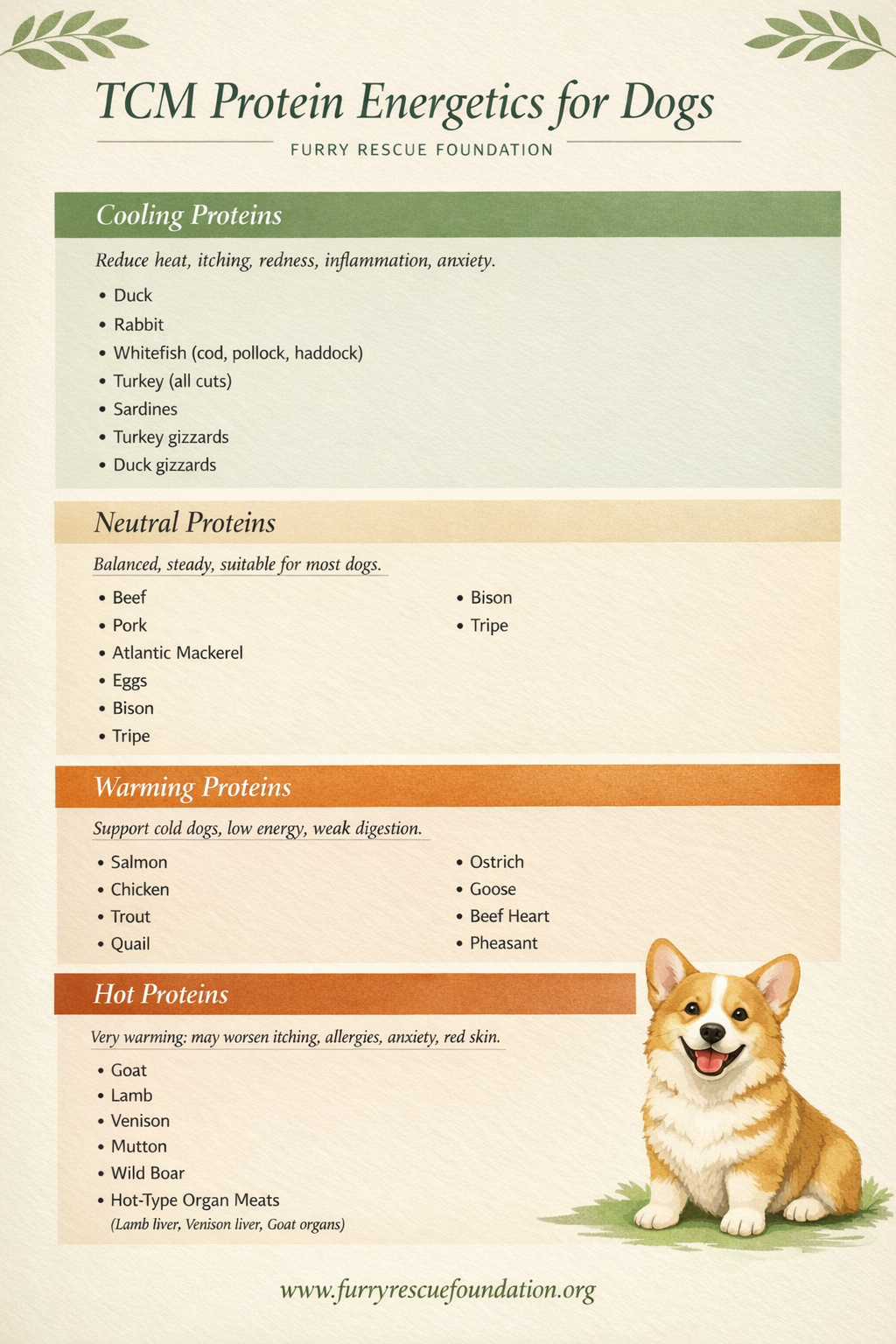
TCM protein energetics chart for dogs — cooling, neutral, warming, and hot proteins.
Why We Share This
Nutrition is one of the simplest ways to help rescued animals heal.
By feeding energetically balanced meals, we support recovery from trauma, allergies, and stress — one bowl at a time.
At Furry Rescue Foundation, we believe every meal can be medicine.
Our mission is to give animals a second chance at life — and that starts with understanding what nourishes them best.